EUROPE 2012
Switzerland, Austria, Germany
AUG.16TH-29TH
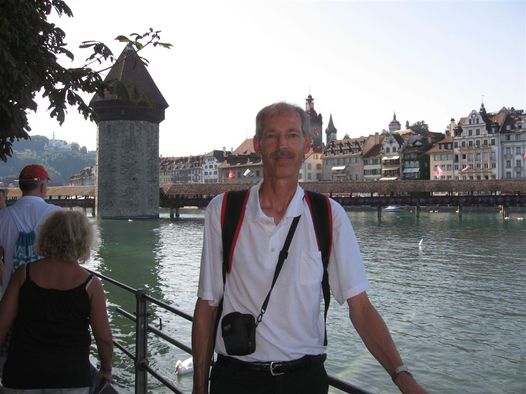
LUZERN SWITZERLAND
I had a great time in Europe with excellent weather and it seems that no matter
where you go there is evidence in the rocks for Creation and Catastrophe!
where you go there is evidence in the rocks for Creation and Catastrophe!
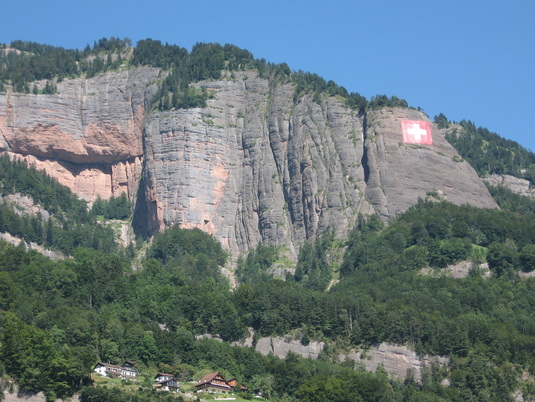
Walk around the Vierwaldstättersee (Lake Luzern)
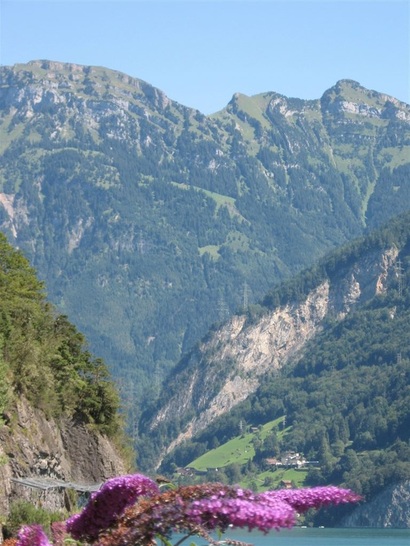
A shot of Lake Luzern (See walkway on the left)
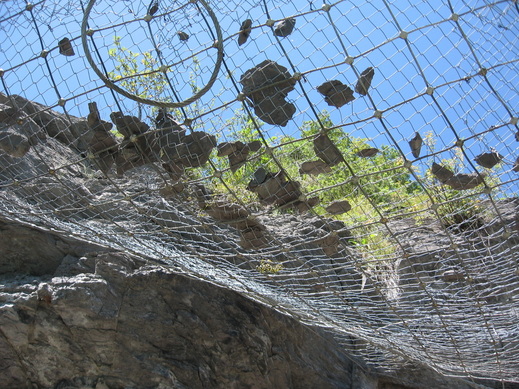
I was very thankful for these overhead nets on parts of the walkway protecting against falling rocks.
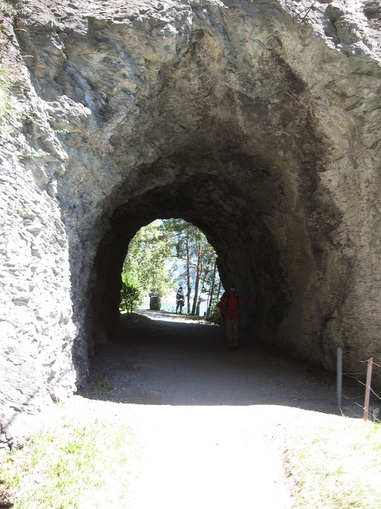
Switzerland is a land of tunnels including Walkway tunnels such as this one.
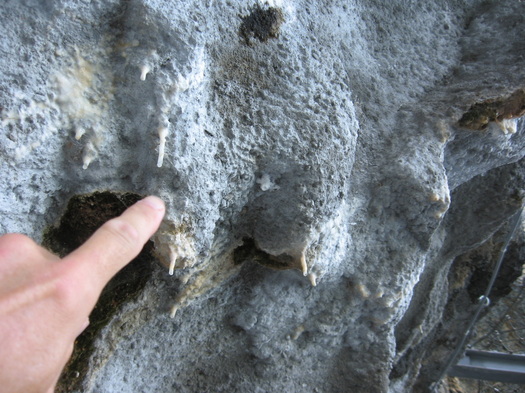
Switzerland also has its share of natural cave stalactites but was surprised to find these in the man made tunnels
around the lake which are probably no more that 50 years old!
around the lake which are probably no more that 50 years old!
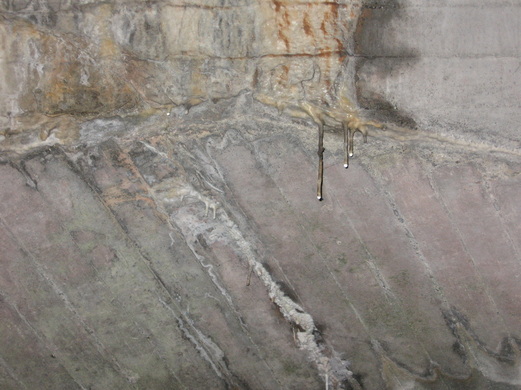
More stalactites on the ceiling of the tunnel.
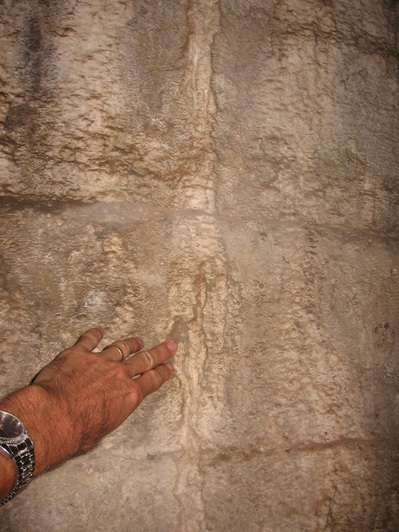
Flowstone running down the walls.
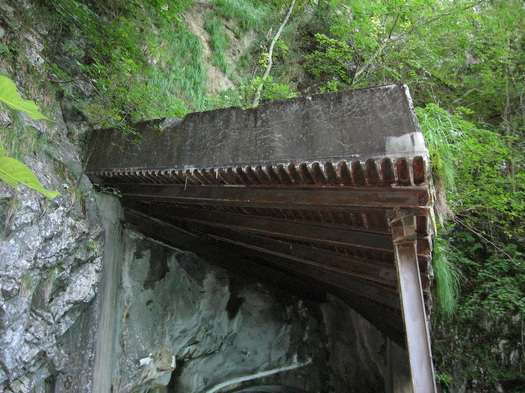
Water dripping off this concrete roof producing large stalacties.
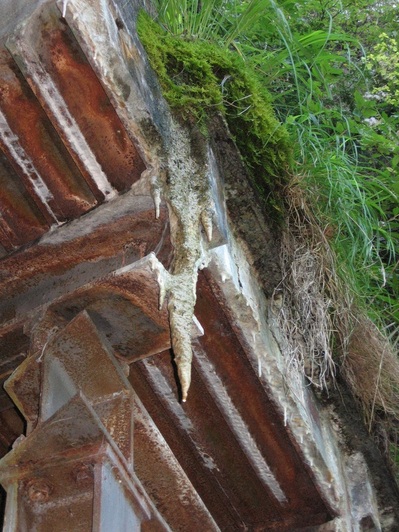
Cave stalactites in Switzerland are considered tens of thousands of years old however
it only goes to show that it doesn't require a lot of time to produce stalactites. Just the right processes!
it only goes to show that it doesn't require a lot of time to produce stalactites. Just the right processes!
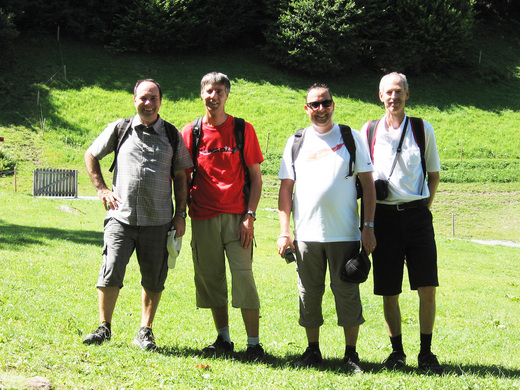
There is no better way to end the walk with Swiss friends than on the
Rütli Meadow, where it was said that Switzerland was founded in 1291!
Rütli Meadow, where it was said that Switzerland was founded in 1291!
Up to Mount Pilatus
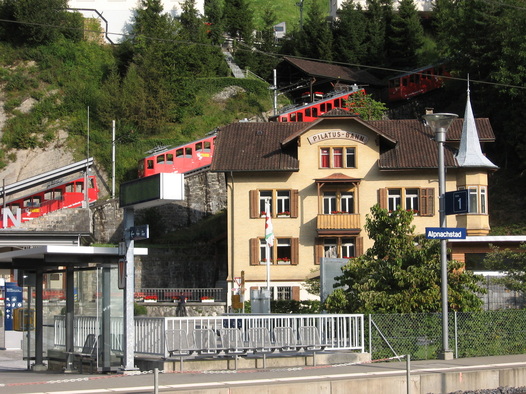
At the base of Mount Pilatus in Alpnachstad.
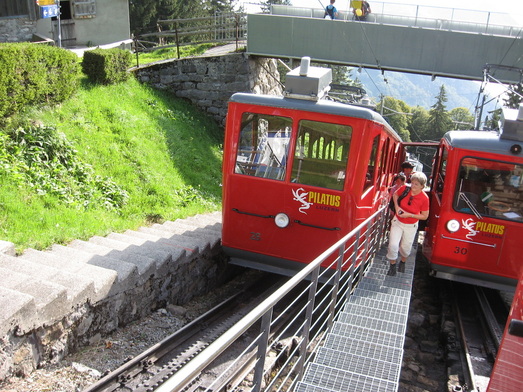
Going up the world's steepest cogwheel railway. A gradient of 48%.
(Video clip may take a few seconds to load)
Riding on the cogwheel railway.
Riding on the cogwheel railway.
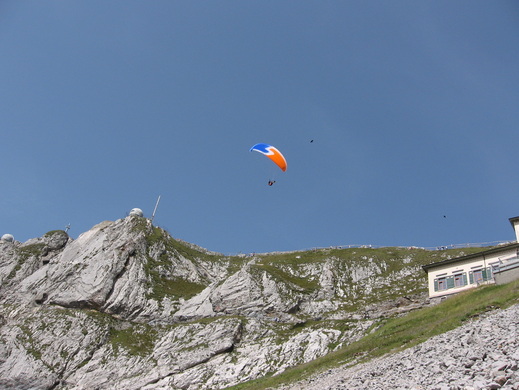
Mount Pilatus made up of cretaceous (Kreide) rock.
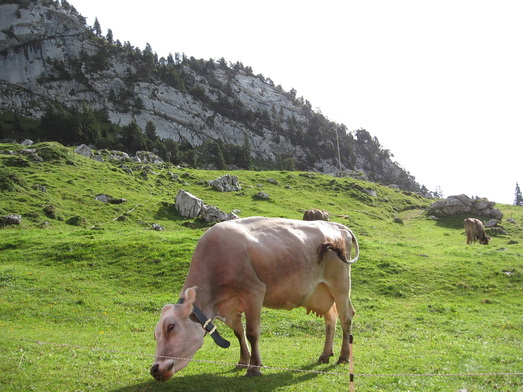
Other views on the way up is Switzerland's icon the Swiss brown cow.
(Video clip may take a few seconds to load)
And what better way to to be greeted at the top than with a Swiss alp-horn!
And what better way to to be greeted at the top than with a Swiss alp-horn!
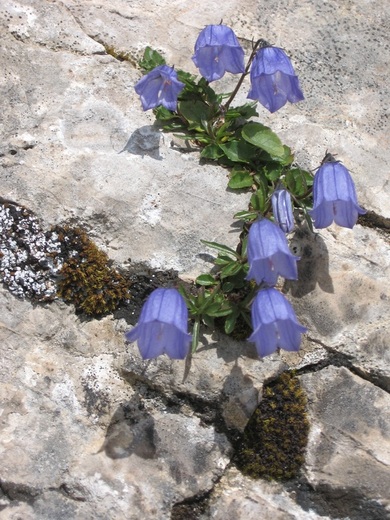
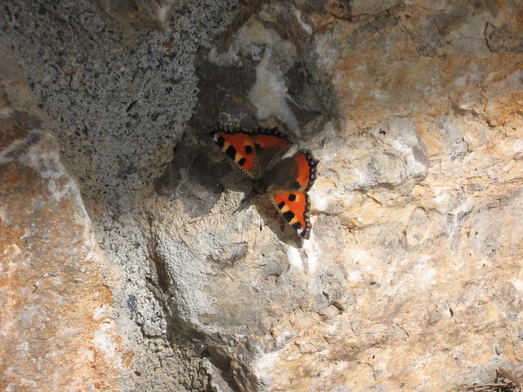
Amazing plant and animal life way up here at 7000ft.
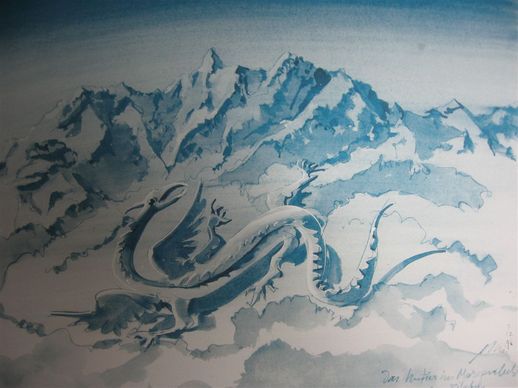
Like Europe, Switzerland has its share of dragon legends and around this mountain were many dragon stories.
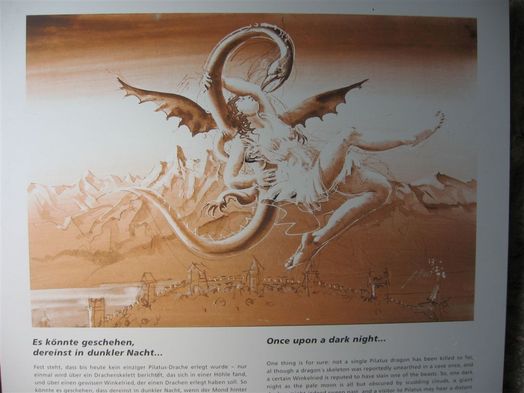
With so many dragon stories throughout the world there must be some grounding of truth and actually there is overwhelming evidence to suggest that these dragons are in fact dinosaurs and flying dinosaurs such as the pterodactyl. Read some of the
interesting stories on some of the plaques around the top of the mountain.
interesting stories on some of the plaques around the top of the mountain.
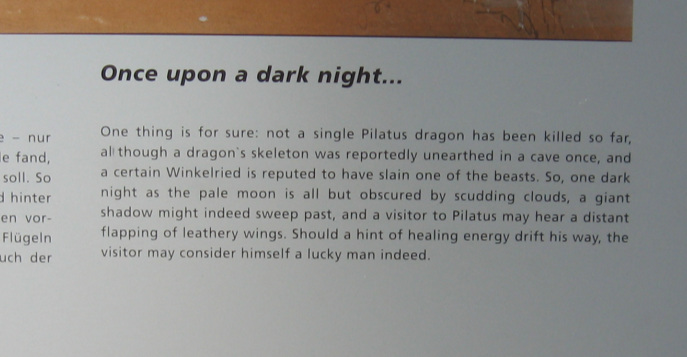
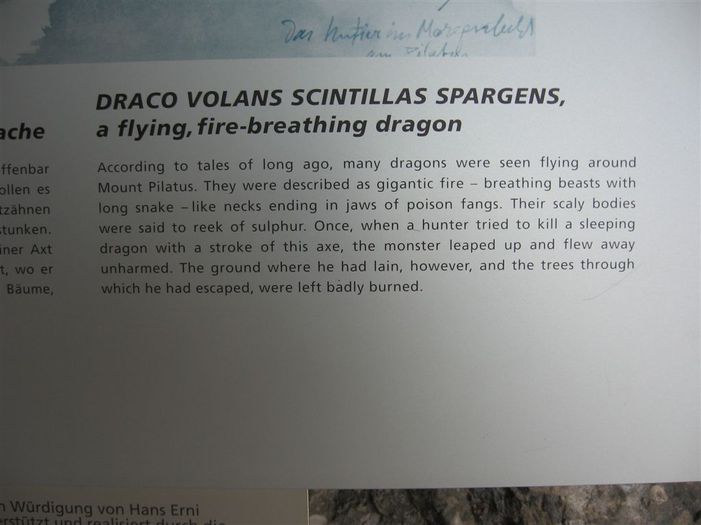
Apparently some sightings were even recorded such as the one below.
From the works of Athanasius Kircher (obit 1680), Mundus subterraneus, quo universae denique naturae divitiae (Amsterdam 1664-1668).
‘(*)In 1619 as I was contemplating the serene sky by night, I saw a very bright dragon with flapping wings go from a cave in a great rock in the mount called Pilatus [pictured above] toward another cave, known as Flue, on the opposite side of the lake [Lucerne]. Its wings were agitated with much celerity; its body was long as well as its tail and neck. Its head was that of a serpent with teeth, and when it was flying, sparks were coming out of it like the embers thrown by an incandescent iron when struck by smiths on an anvil. At first, I thought it was a meteor, but after observing more closely, (I saw) it was truly a dragon from the recognizable motion of the members. This I write to you, your reverence, in case you should doubt that dragons truly exist in nature’ .
Sources;
http://www.pilatus.ch/de/der-berg/sagen-mythen/drachensagen/
http://en.wikipedia.org/wiki/Mount_Pilatus#cite_note-Dragons_in_Switzerland-3
http://www.strangehistory.net/2011/07/17/dragons-in-swtizerland/
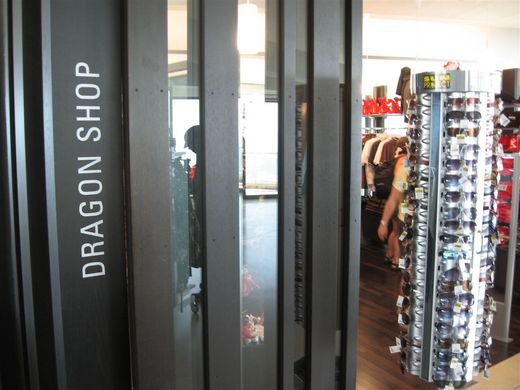
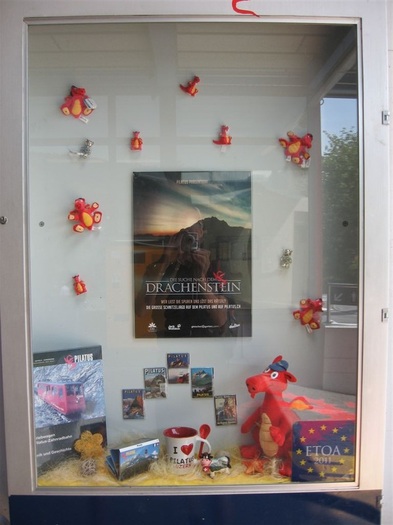
Of course what better way to generate a bit of income that a good dragon story as seen in the next few photos!
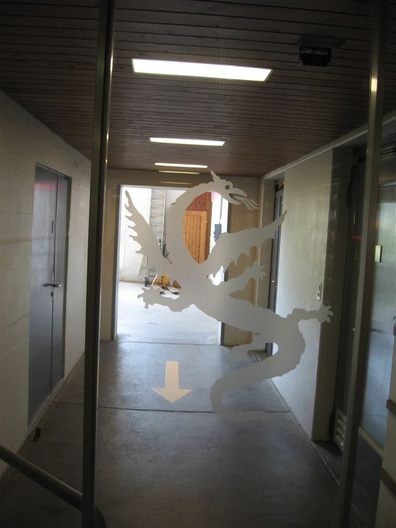
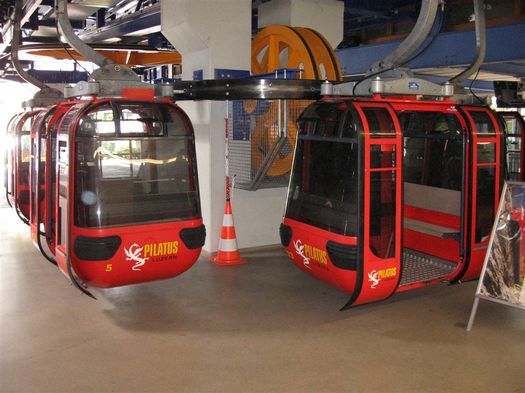
I can only scratch the surface on the argument that dragons and dinosaurs are one and the same but my colleague Vance Nelson has written an amazing and thorough book on the subject. Here's what Vance has to say:
If dinosaurs lived alongside people as the Bible indicates, then surely somewhere on planet earth the evidence of such an extraordinary coexistence would be found. Dire Dragons provides revolutionary and profound evidence from ancient artwork that there is a real, powerful, documentable, and defensible connection between the dragons of ancient times and the dinosaurs we know so well from fossils. If you need to see the evidence, this book is for you. Vance Nelson.
If dinosaurs lived alongside people as the Bible indicates, then surely somewhere on planet earth the evidence of such an extraordinary coexistence would be found. Dire Dragons provides revolutionary and profound evidence from ancient artwork that there is a real, powerful, documentable, and defensible connection between the dragons of ancient times and the dinosaurs we know so well from fossils. If you need to see the evidence, this book is for you. Vance Nelson.
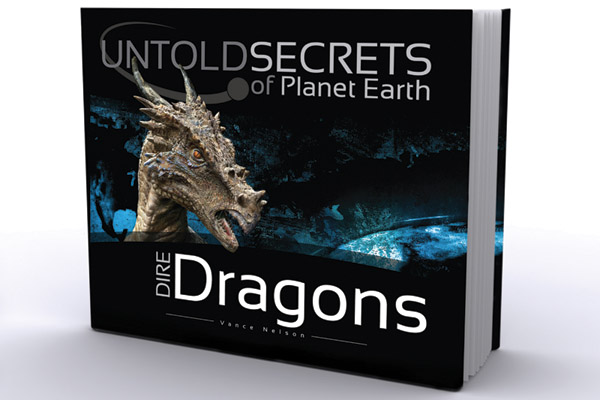
Click
http://www.untoldsecretsofplanetearth.com/home.html to learn more about the book.
On the Road to Schaffhausen
The most fossil rich area is in the North and East part of Switzerland in the Jurassic region.
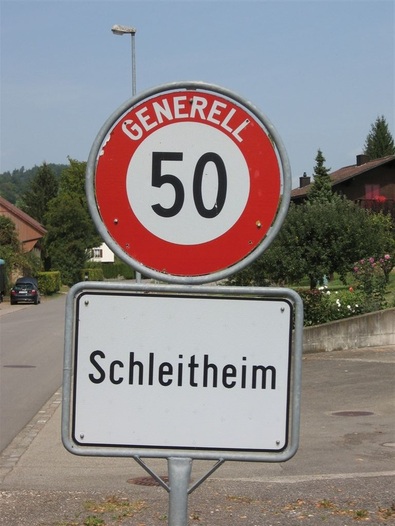
A web site recommended visiting the area of Scheitheim and Hallau for some good fossil collecting.
A web site recommended visiting the area of Scheitheim and Hallau for some good fossil collecting.
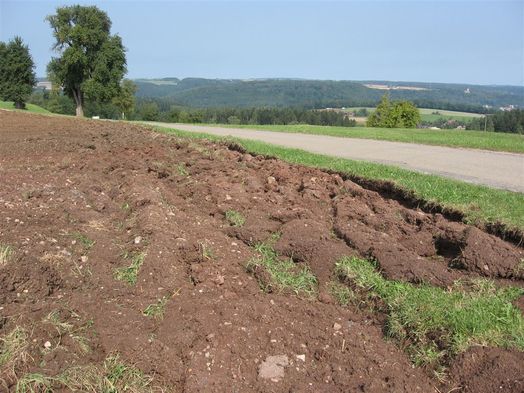
It was apparent I was moving out of the Cretaceous region and into the Jurassic by the colour change of the soil.
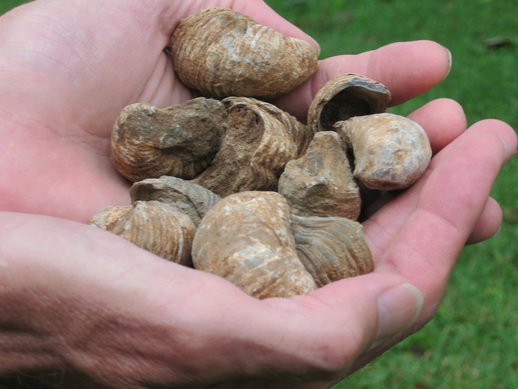
These fields were just loaded with the oyster shell (Gryphaea)
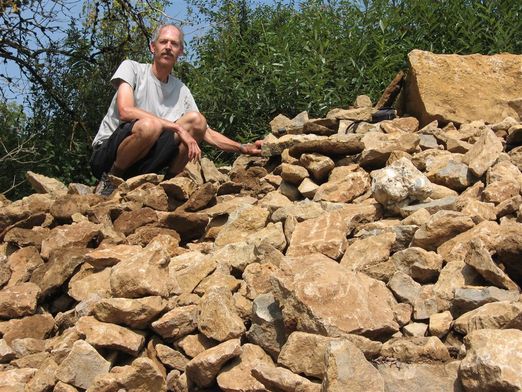
A visit to a farmers rock pile was enough to yield a variety of great fossils.
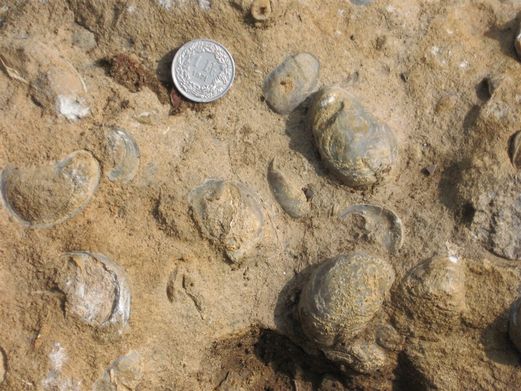
More of the oyster shell (Gryphaea)
(Size Note; The Swiss Franc is about the size of our loonie)
(Size Note; The Swiss Franc is about the size of our loonie)
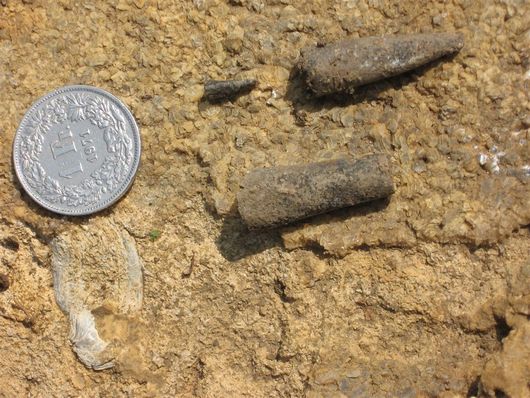
I was pleased to find many facinating belemnite fossils which are found throughout Europe but in Ontario are quite rare.
A belemnite is a squid like creature with an internal chambered shell used for buoyancy. The shell is all that is left as a fossil.
The belemnite has living cousins such as the cuttlefish and is another excellent example of a living fossil.
A belemnite is a squid like creature with an internal chambered shell used for buoyancy. The shell is all that is left as a fossil.
The belemnite has living cousins such as the cuttlefish and is another excellent example of a living fossil.
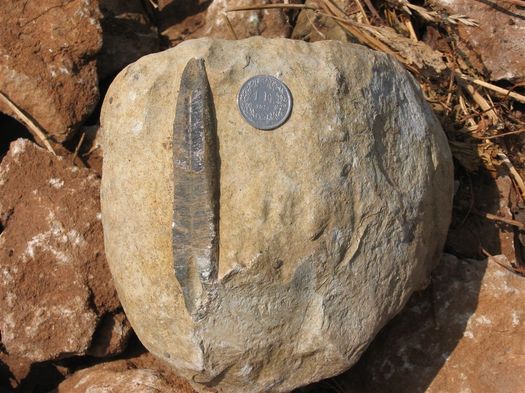
A large belemnite specimen in this field stone boulder.
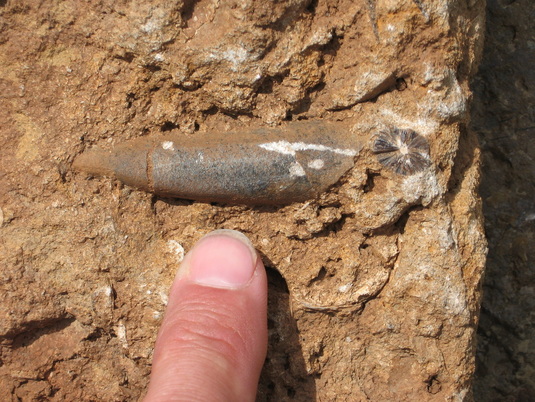
Belemnites were found cracked and broken indicating a turbulent environment.
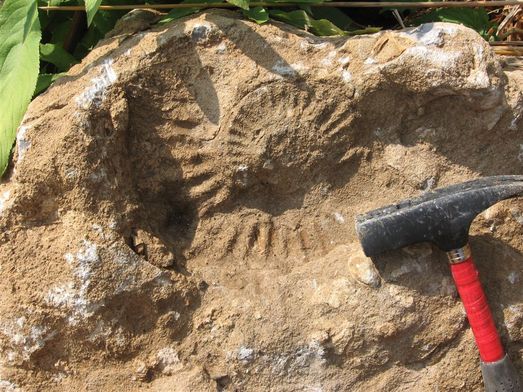
Ammonites are very common in the Jurassic rocks and there was no shortage of them here.
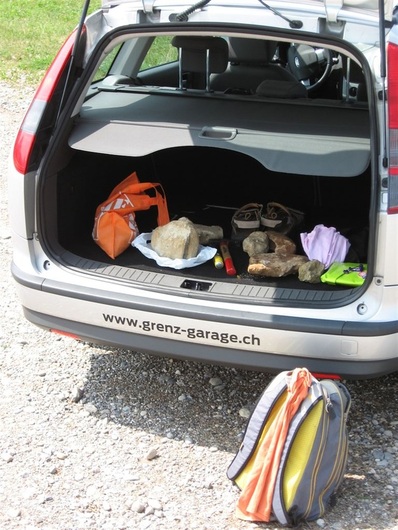
I came away with some good museum specimens and a bunch of garden rocks for some swiss friends!
UP TO THE MOUNTIAN "SÄNTIS" IN THE ST.GALLEN AREA.
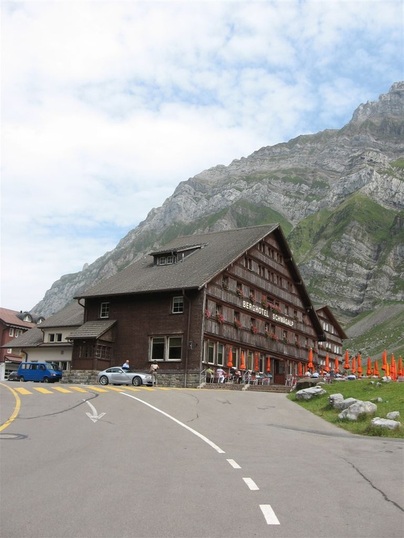
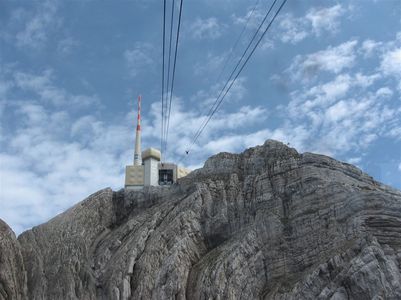
Like Mount Pilatus these are cretaceous (kreide) rocks. It was real
experience riding up in the large cable car to the top at 2502m.
experience riding up in the large cable car to the top at 2502m.
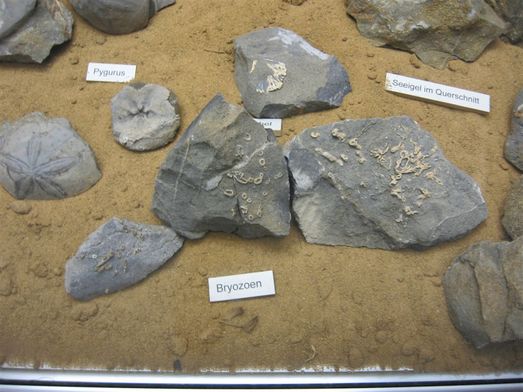
A small fossil display at the top shows the types of fossils that can be found on the mountain.
To the left is a seeigel (sea urchin) Pygurus.
To the left is a seeigel (sea urchin) Pygurus.
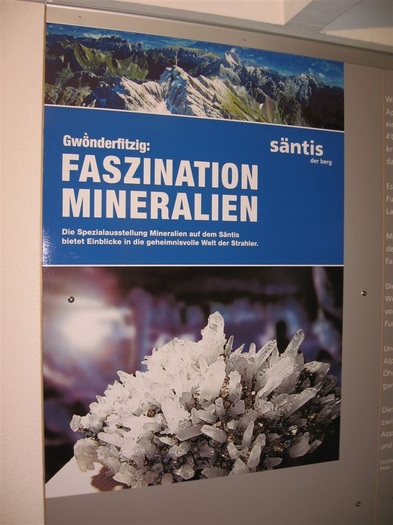
There was also a great mineral exhibition displaying the minerals found in Switzerland.
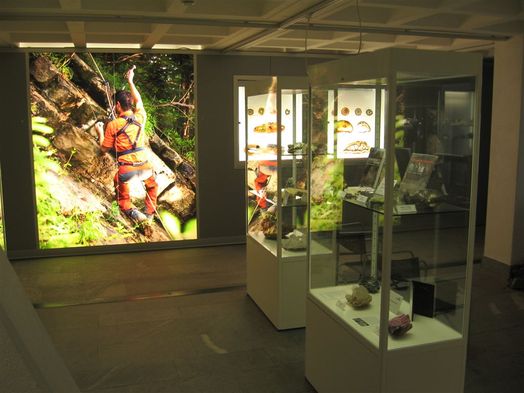
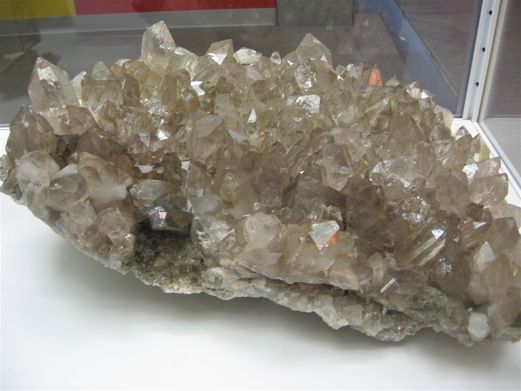
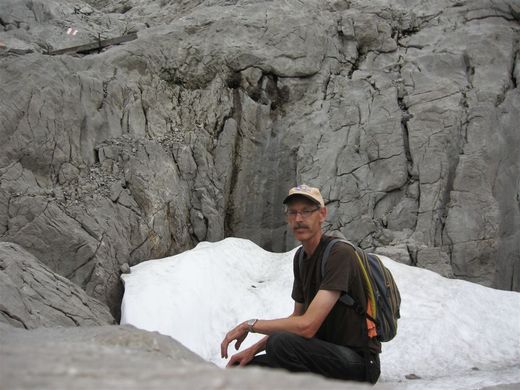
Taking a hike on a trail around the peaks with the presence of snow even in August.
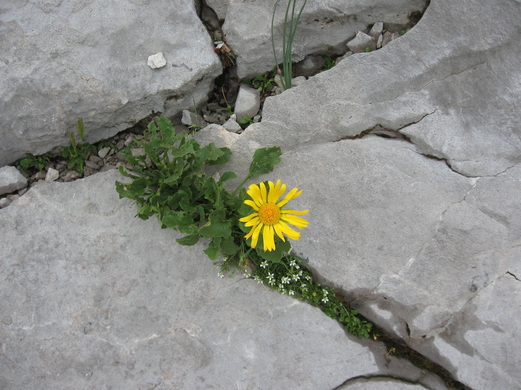
Plant life tries to hang on even way up here.
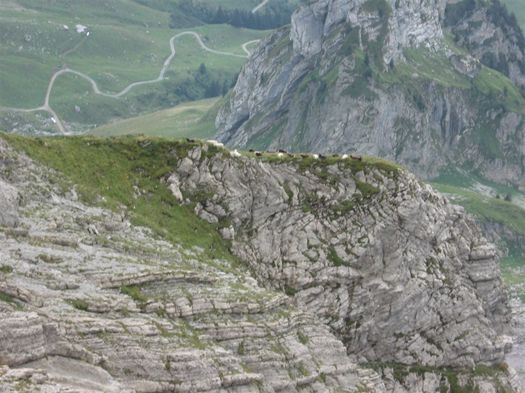
The farmers do take advantage of what vegetation there is by bringing their herds up near the top.
If you look closely you will see a heard of black, brown and white sheep.
If you look closely you will see a heard of black, brown and white sheep.
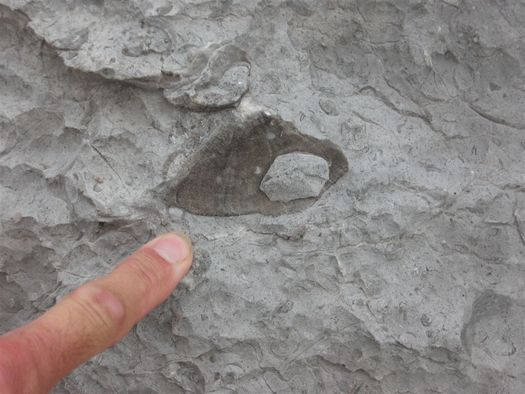
The first fossil you do find is the sea urchin.
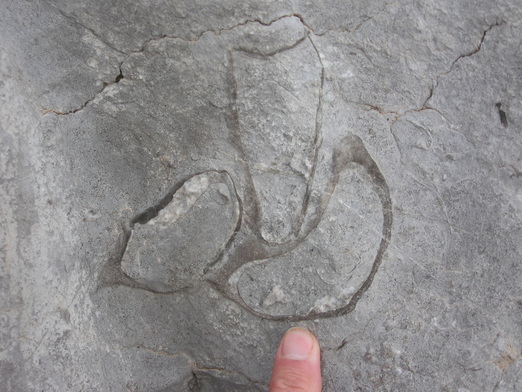
These are cross sections of several sea urchins.
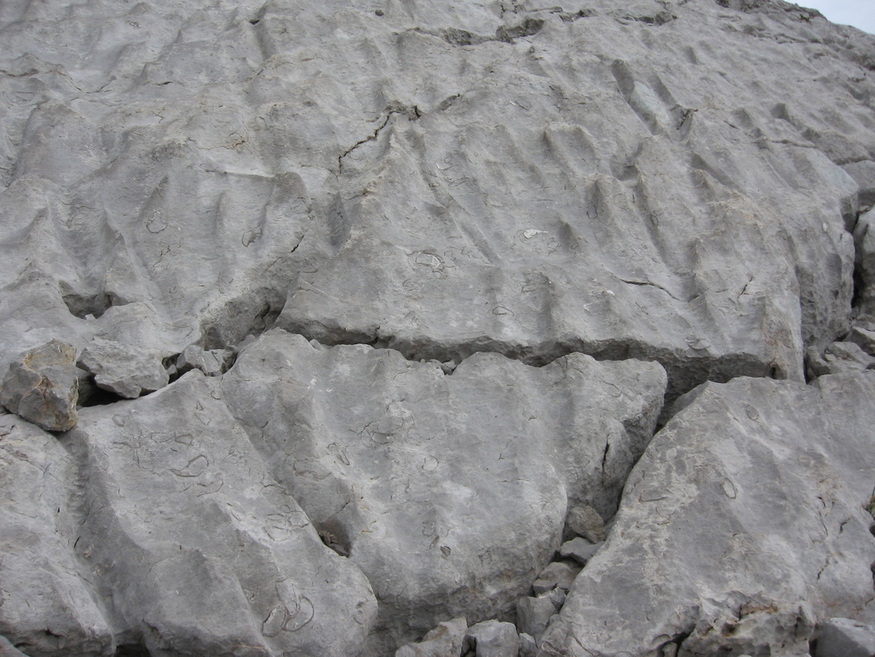
If you look closely, the rocks are just loaded with millions of sea urchins. This is another great example of a dump deposit.
Destination Solnhofen.
On the Road Through Austria Into Germany.
On the Road Through Austria Into Germany.
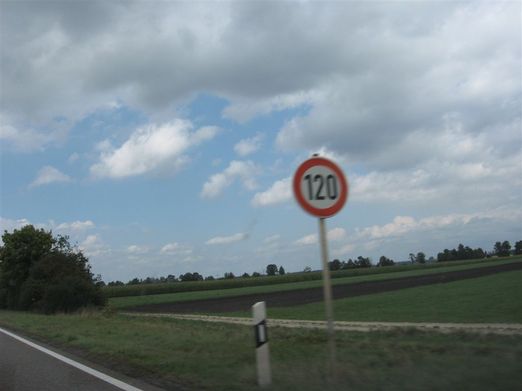
On the autobahn in Germany. You got to like this speed limit!
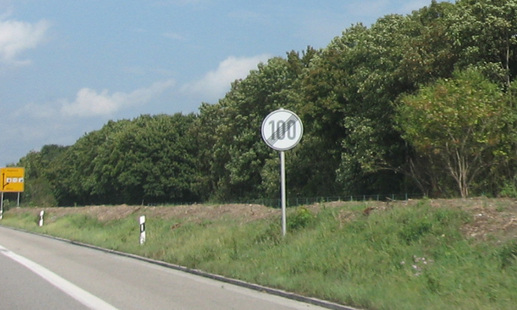
How about this one. This says 100km speed limit ends. After that anything goes. It's limitless!
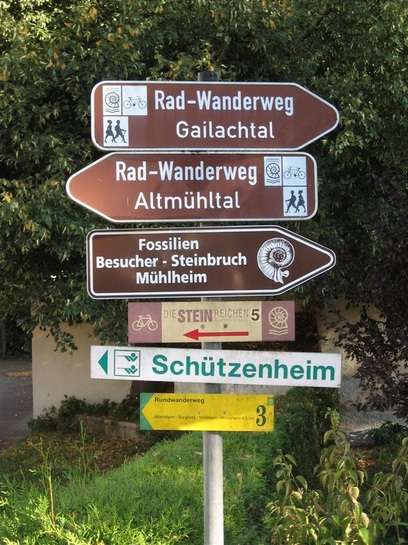
I had a sense I was entering a fossil collecting area!
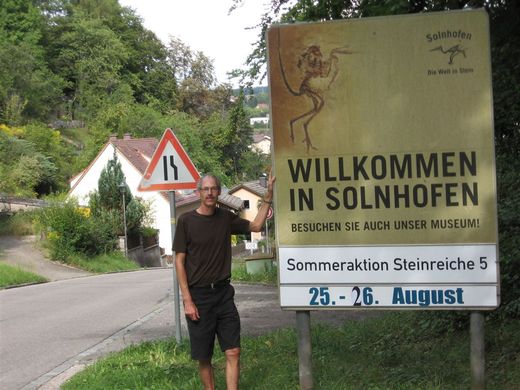
After 4 hours of driving I made it to the town of Solnhofen, the home town of the famous Archaeopteryx,
the "so called" transitional form from dinosaur to bird. Although I won't get into the archaeopteryx at this time
colleague Ian Juby reports on it on his web site. Visit; http://ianjuby.org/newsletter/?p=215
the "so called" transitional form from dinosaur to bird. Although I won't get into the archaeopteryx at this time
colleague Ian Juby reports on it on his web site. Visit; http://ianjuby.org/newsletter/?p=215
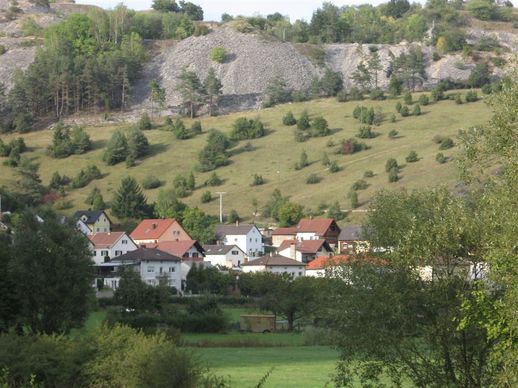
Little towns like Mörnsheim are dwarfed by the large quarrys in the area.
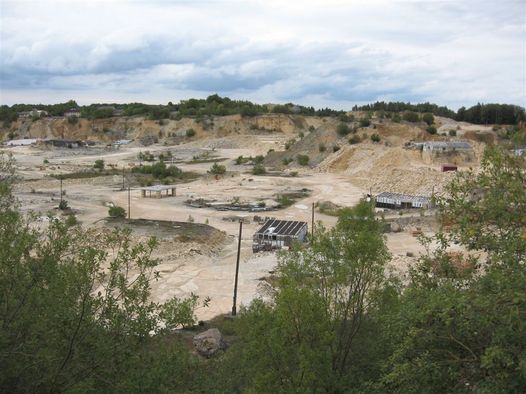
A large quarry removing slabs of lithographic limestone stone for use as tiles,
floors and counter tops. It has the compressive strength of granite.
floors and counter tops. It has the compressive strength of granite.
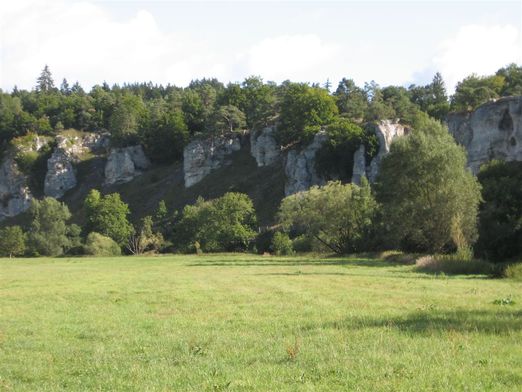
A beautiful rock face near Solnhofen called the Twelve Apostles.
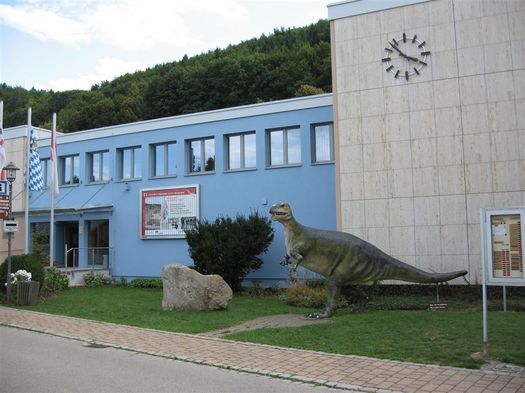
The first stop is to the local museum, the Buergermeister-Mueller Museum.
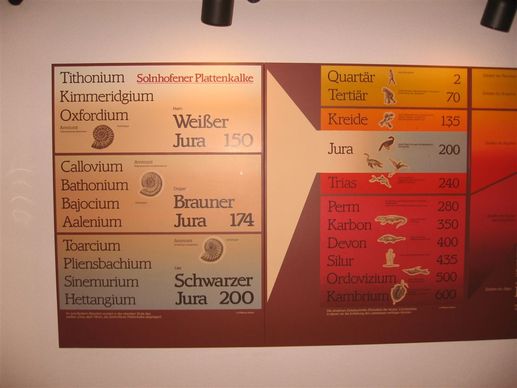
The Fossils are all collected from the Jurassic sedimentary rocks. John Mackay director of Creation Research can best explain why Jurassic had nothing to do with millions of years. Go to.
http://www.creationresearch.net/research/Solhofen.htm
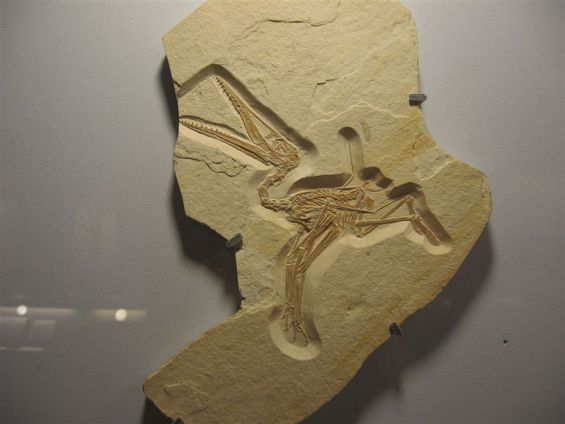
Amazingly preserved fossils such as the short tailed pterodactyl (Pterodactylus kochi)
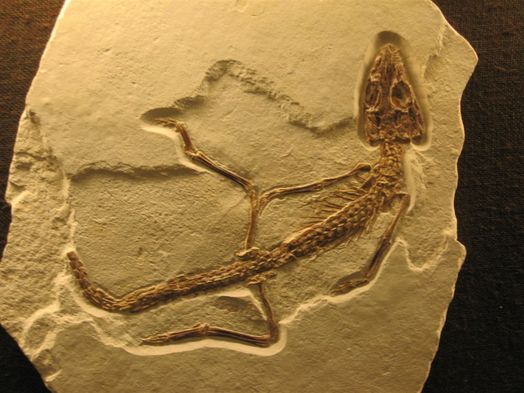
Crocodile (Landkrokodils)
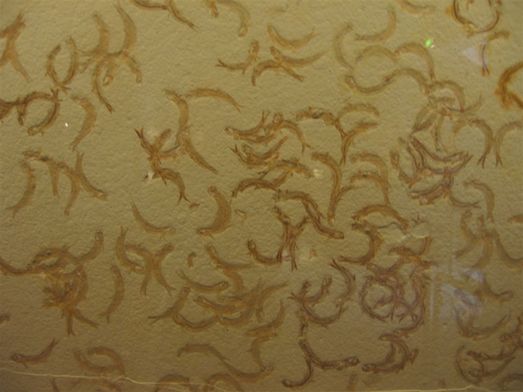
Photo covering only part of a much larger slab of fish.
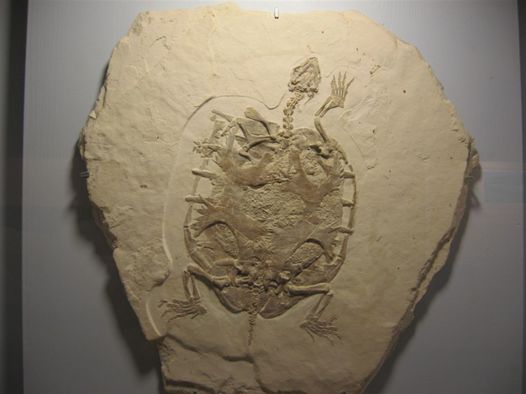
Turtle (Eurysternum)
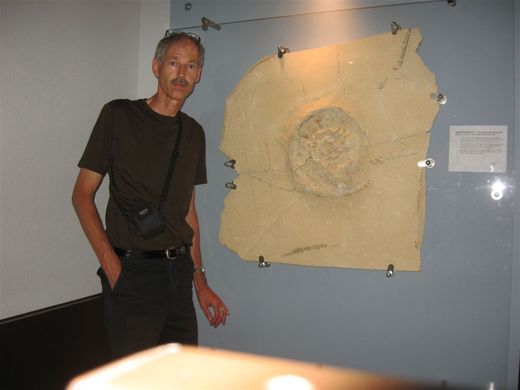
My favorite. The Ammonite.
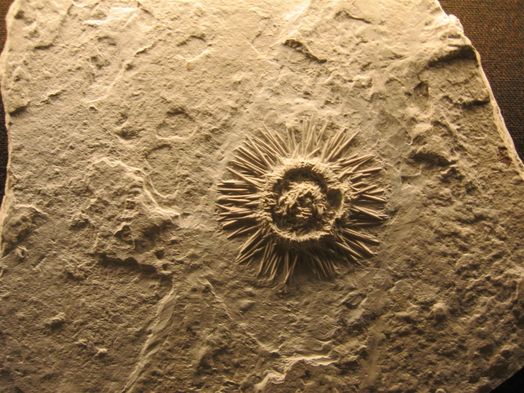
Most echinoids loose their spines after death but this sea urchin has its spines preserved indicating a quick burial.
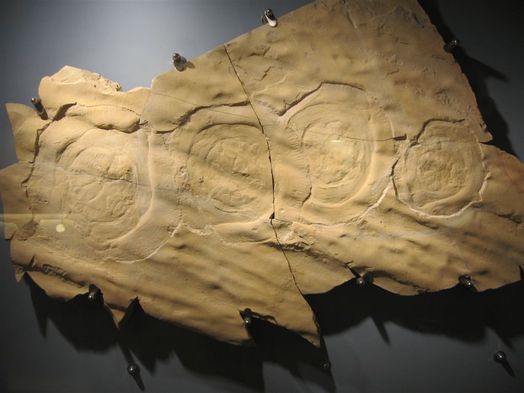
A row of Jellyfish (Rizostomites admirandus). These soft bodied creatures also must have been buried quickly to be so well preserved.
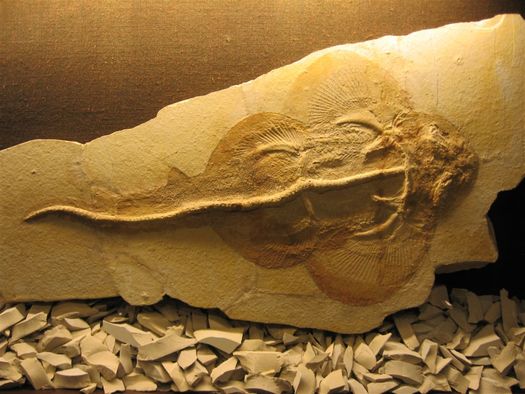
Sea angel shark.
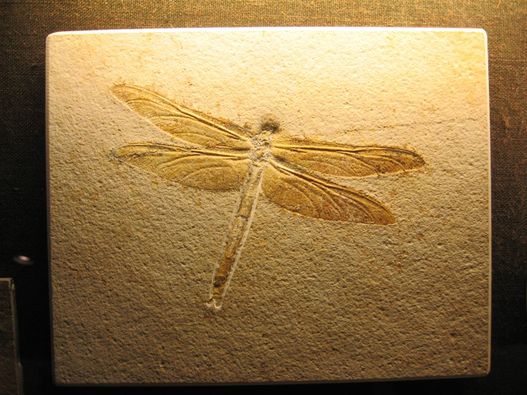
Well preserved Dragonfly.
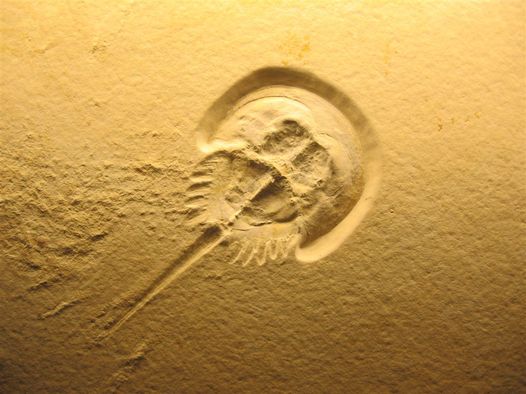
Fossil horseshoe crab.
We recognize fossil species because they look like their living counterpart.These animals produces after
their own kind Just like Genesis says or like the archaeopteryx became extinct. No evolution here.
Genesis 1:11-25
We recognize fossil species because they look like their living counterpart.These animals produces after
their own kind Just like Genesis says or like the archaeopteryx became extinct. No evolution here.
Genesis 1:11-25
(Video clip may take a few seconds to load)
Fossil horseshoe crab with track-ways.
Fossil horseshoe crab with track-ways.
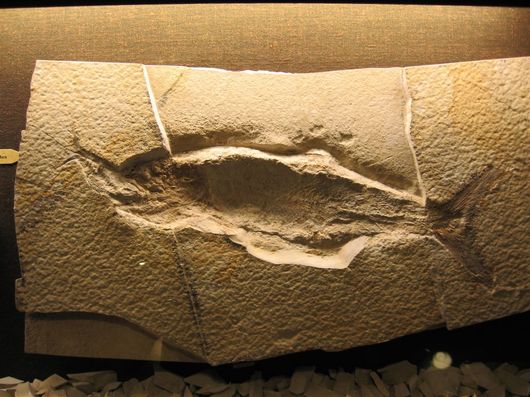
What's a fossil museum without a fish eating a fish?
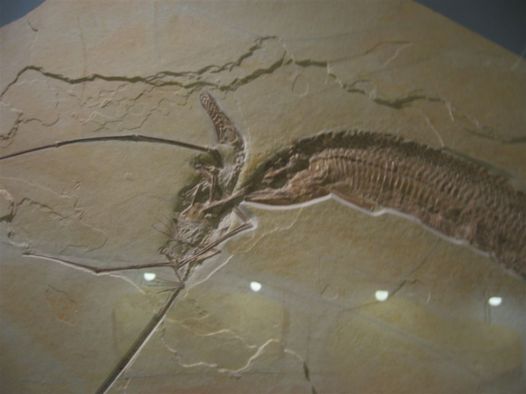
The best exhibit was the DRAMA IN DER URZEIT AUSSTELLUNG (PRIMEVAL DRAMA) starting with this fish, Schnabelfish Aspidorhynchus that caught in its mouth a flying dinosaur, Flugsaurier Rhamphorhynchus muensteri and the flying dinosaur has in its belly small fish, Beutefisch. No wonder the sign reads "FRESSEN UND GEFRESSED WERDEN" (EAT AND BE EATEN!)
The next few photos also show signs of drama.
The next few photos also show signs of drama.
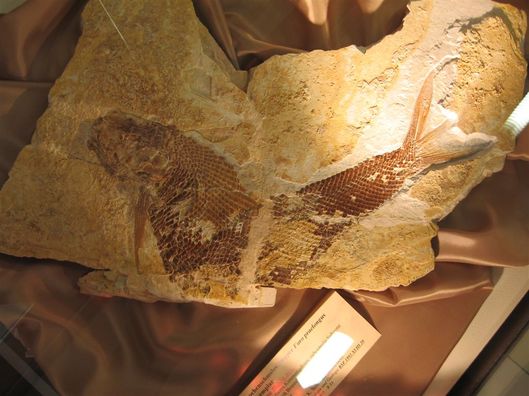
Zerbissen (Bitten)
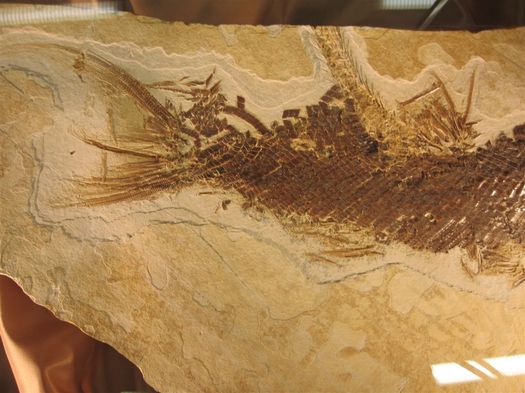
Wirbelsäulendurchbruch (Broken Vertebra)
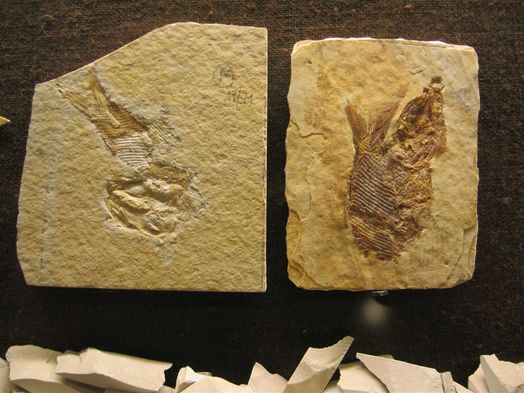
Zerbissen (Bitten)
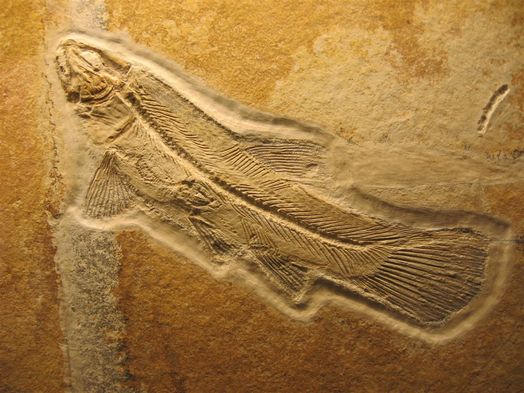
Verschlungen (Devoured), small fish inside stomach.
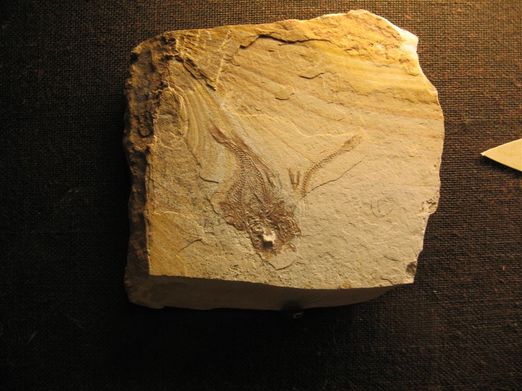
Ausgespuckt (Spit out)
As usual museums are full of evidence that backs up the bible. In this cruel "fish eat fish'" environment displayed here we can conclude that the Jurassic rocks here were laid down after the fall of man because in the good world that God made creatures were commanded to eat plants. Genesis 1:29. Death and struggle came afterwards. Going by the genealogies of the bible we can conclude that these rocks were laid down thousands of years ago, not millions!
Further evidence shows that only a large flood such as the recent flood of Noah's day could have laid down this large bed of sediment quickly to have preserved these "Kodak Instamatic Snapshots" in time.
I'm going to repeat myself here again but the mixed land and marine fossil specimens found in the same layers indicate a large dump deposit.
Further evidence shows that only a large flood such as the recent flood of Noah's day could have laid down this large bed of sediment quickly to have preserved these "Kodak Instamatic Snapshots" in time.
I'm going to repeat myself here again but the mixed land and marine fossil specimens found in the same layers indicate a large dump deposit.
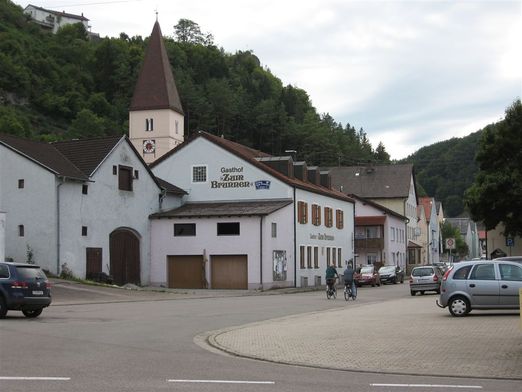
Off to a hobby quarry in Mühlheim. Photo of a quaint little town called Mörnsheim on the way.
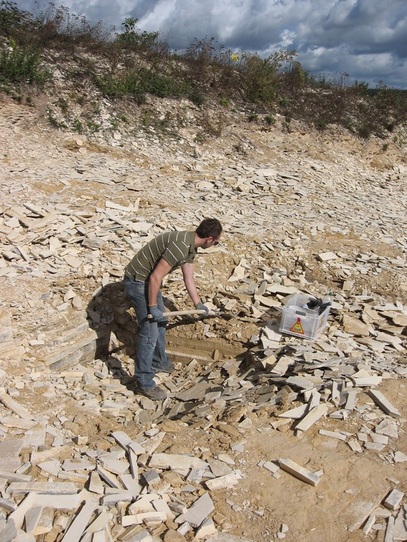
At the Besuchersteinbruch (hobby quarry) near Mühlheim.
The rock is Jurassic consisting of lithographic (finely split) limestone.
The rock is Jurassic consisting of lithographic (finely split) limestone.
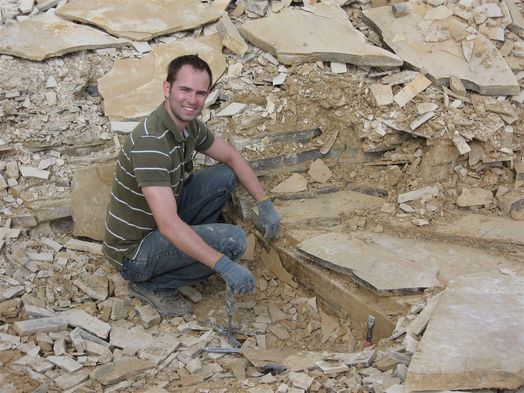
Fossil collecting colleague from Germany Matthias working on Plattenkalken (limestone slabs)
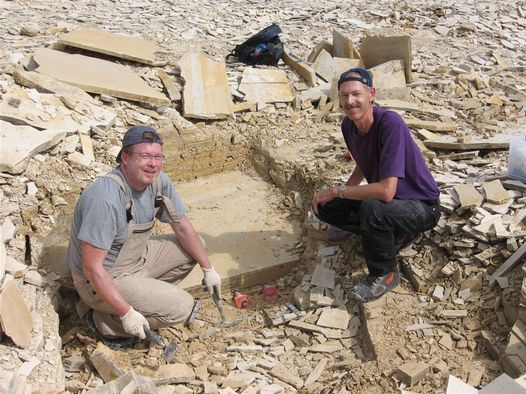
Colleague Stephan about to pry up another layer.
(Video clips may take a few seconds to load)
Clearing the slab.
Clearing the slab.
Prying the slab.
Removing the slab.
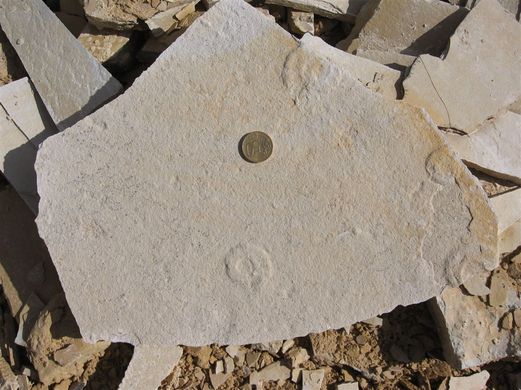
The prevalent fossil was the ammonite. Even roll marks from the ammonites have been found in these quarrys as the ammonites were being washed in by turbulent waters.
Source:
Trace Fossil Analysis by Adolf Seilacher
Publisher: Springer; 1 edition (May 3, 2007) Pages: 226
Source:
Trace Fossil Analysis by Adolf Seilacher
Publisher: Springer; 1 edition (May 3, 2007) Pages: 226
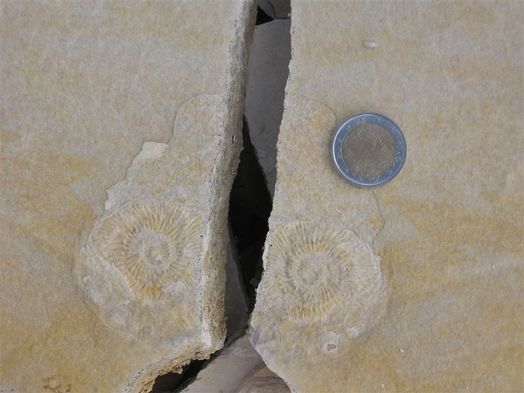
Ammonite fossil and cast.
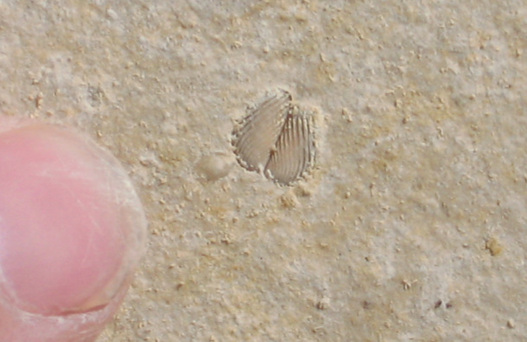
Also found amongst the ammonites or even still attached is the aptychus which functions as a jaw or lid.
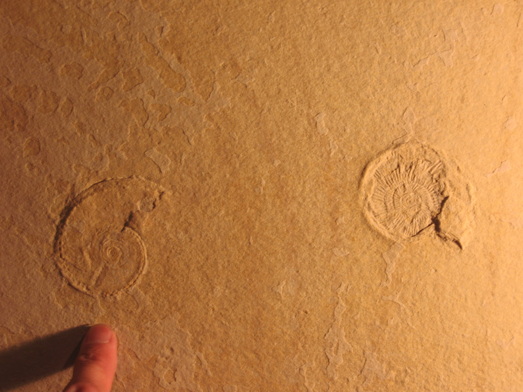
The best ammonite specimen found was this slab containing two different ones,
left (Fontannesiella prolithographica) and right (Lithacoceras sp.)
left (Fontannesiella prolithographica) and right (Lithacoceras sp.)
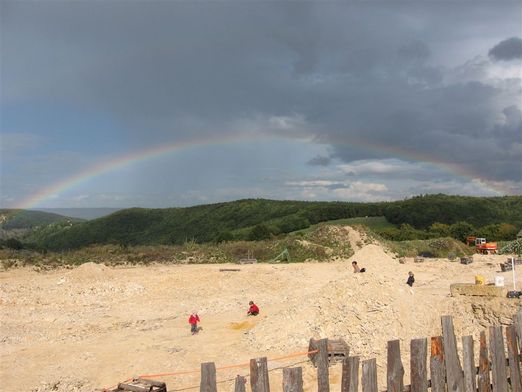
What better way to end the day than with a complete rainbow over the quarry!
Below in the rocks, the record of a devastating flood, and in the sky, a sign of
a promise that God will never again send a flood to destroy the earth. Genesis 9:11
Below in the rocks, the record of a devastating flood, and in the sky, a sign of
a promise that God will never again send a flood to destroy the earth. Genesis 9:11
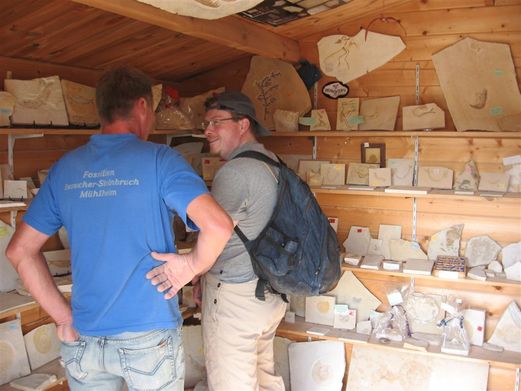
Stephan with Manager Rolland Pöschl.
If you weren't satisfied with your fossil finds you could purchase them at the store.
Whether you are in a quarry or in a museum there is ample evidence for
Creation (creatures producing after their own kind) and Catastrophe.
If you weren't satisfied with your fossil finds you could purchase them at the store.
Whether you are in a quarry or in a museum there is ample evidence for
Creation (creatures producing after their own kind) and Catastrophe.
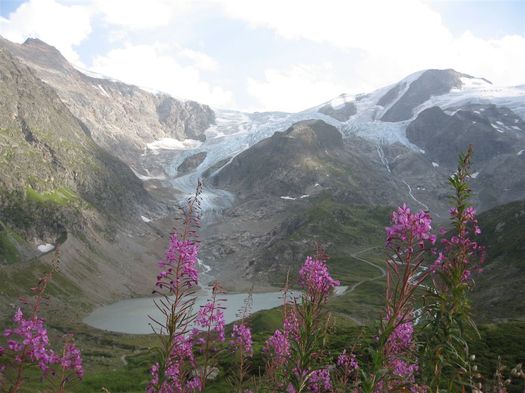
Finally I will leave you with this breathtaking photo of a glazier on the Susten pass in the Canton of Bern Switzerland.